Red Light Therapy
Cellular Energy, Skin Health, Pain Relief
Specific wavelengths of red and near-infrared light penetrate tissue to accelerate healing,
reduce inflammation, and restore cellular function.
What Is Red Light Therapy?
The Science of Light as Medicine
Red light therapy — clinically known as photobiomodulation (PBM) — delivers specific wavelengths of red (630–660nm) and near-infrared (810–850nm) light directly into tissue. These wavelengths are absorbed by cytochrome c oxidase in the mitochondria, triggering a measurable increase in ATP production — the fundamental energy currency of every cell in the body.
The downstream effects are broad and clinically documented: accelerated tissue repair, reduced chronic and acute inflammation, enhanced collagen synthesis, improved circulation, and neuroprotective benefits. Used clinically for wound healing and pain management for over three decades, red light therapy is now equally recognised for skin rejuvenation, athletic recovery, and cognitive performance applications.
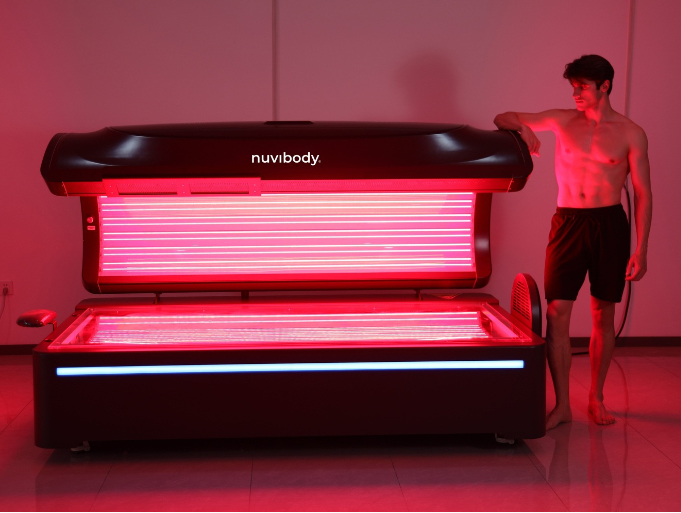
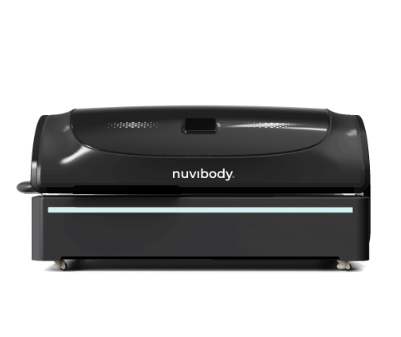
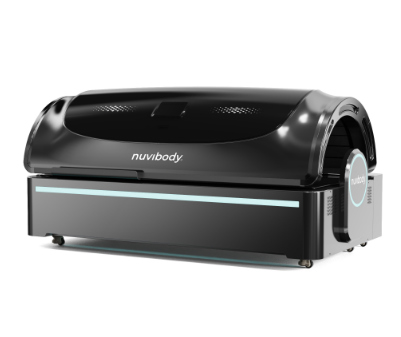
At Aspire Clinic, sessions are delivered using medical-grade LED panels and targeted laser devices that significantly exceed the output and penetration depth of consumer-grade products. Every protocol is calibrated to your specific objectives — wavelength, intensity, duration, and treatment area are all adjusted to maximise therapeutic effect.
“The most elegant interventions are those the body already understands. Light is the original cellular signal — we are simply delivering it with precision.”
Outcomes & Who Benefits
Results That Compound With Each Session
Skin Rejuvenation
Collagen Production & Skin Quality
Red light stimulates fibroblast activity and upregulates collagen and elastin synthesis at the transcription level. Clinical studies demonstrate measurable improvement in skin texture, fine lines, pore size, and overall tone. Results are progressive and cumulative across a treatment course.
Pain & Inflammation
Chronic Pain & Joint Relief
PBM modulates inflammatory signalling pathways, reducing pro-inflammatory cytokines and increasing anti-inflammatory mediators. Clinically demonstrated efficacy for osteoarthritis, tendinopathy, lower back pain, and neuropathic conditions. Pain reduction is often noticeable within the first few sessions.
Recovery & Performance
Accelerated Healing & Athletic Recovery
Enhanced ATP production and reduced post-exercise inflammatory burden translate to measurably faster recovery between training sessions. Soft tissue repair, muscle recovery, and delayed-onset muscle soreness are all positively affected. Used by elite athletes and professional teams worldwide.
Cellular Energy
Improved Energy & Reduced Fatigue
Mitochondrial upregulation means more efficient ATP synthesis — the biochemical foundation of energy at every level. Patients with chronic fatigue, post-viral syndrome, and high-demand lifestyles report sustained improvements in vitality and cognitive clarity.
Sleep & Circadian
Sleep Quality & Circadian Regulation
Red light exposure — particularly in the evening — supports melatonin production and circadian rhythm regulation without the blue-light disruption of screen exposure. Improved sleep onset and sleep quality are among the most commonly reported benefits.
Treatment Synergy
Enhanced Outcomes Across Pillars
Uniquely at Aspire, red light therapy is available as an adjunct to aesthetic procedures (post-micro-needling, post-peel, post-filler) and dental recovery protocols. Photobiomodulation accelerates tissue repair and reduces post-procedural inflammation — improving outcomes across treatment pillars.
2–4x
Increase in collagen density observed in controlled clinical studies
50%
Reduction in delayed-onset muscle soreness in athletic recovery trials
630–850nm
Therapeutic wavelength range — red through near-infrared spectrum
The Process
Your Red Light Therapy Session
Pre-Session Assessment
Your first session begins with a brief clinical assessment. We review your objectives — skin rejuvenation, pain management, athletic recovery, or general cellular optimisation — and select the appropriate wavelength, intensity, and treatment zone. Contraindications (photosensitising medications, active retinoid use on treatment areas) are confirmed.
Preparation & Positioning
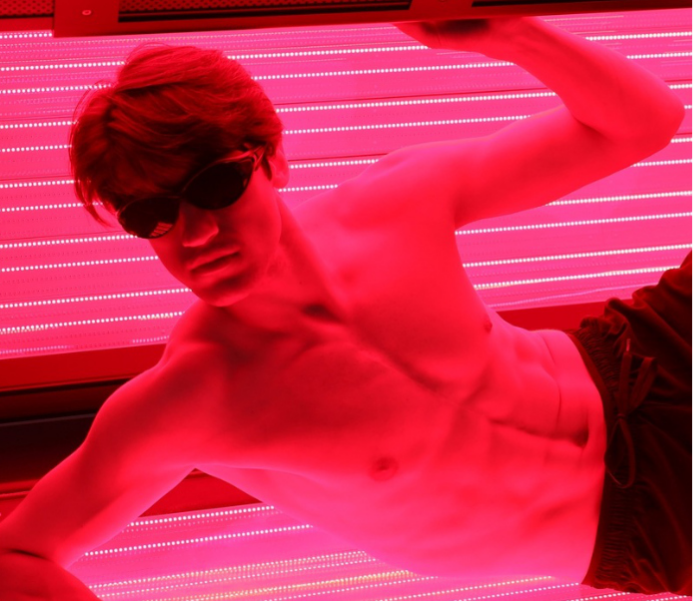
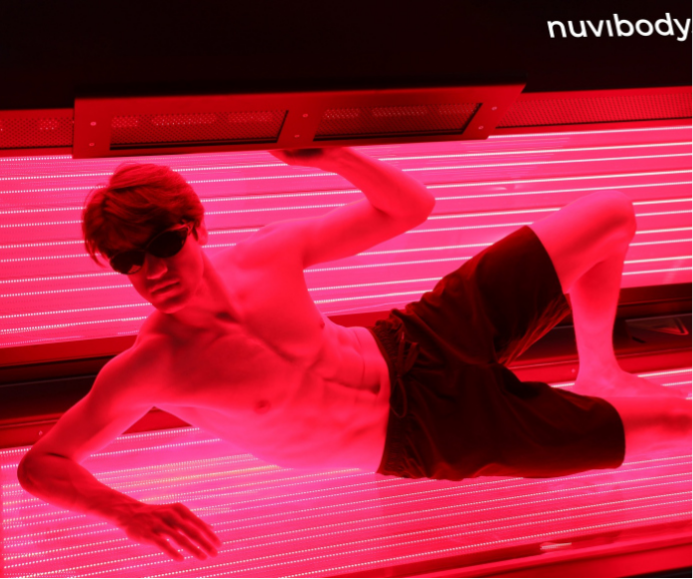
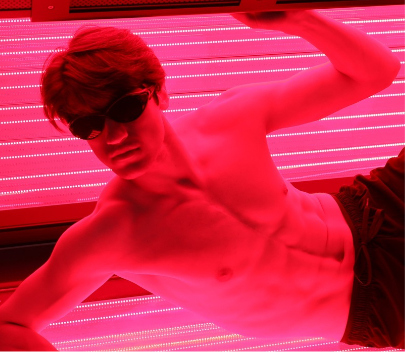
You change into comfortable clothing or are positioned for targeted treatment. Protective eyewear is provided. The treatment area is exposed and positioned at the optimal distance from the light source — typically 15–30cm for panel therapy, or direct contact for targeted laser devices.
Light Therapy at Dose
Medical-grade LED panels or targeted laser devices deliver calibrated wavelengths of red (630–660nm) and near-infrared (810–850nm) light to the treatment area. The experience is comfortable and non-invasive — you may feel gentle warmth but no heat or pain. Most patients read, rest, or listen to audio during the session.
Post-Session Review
Your practitioner conducts a brief post-session check, noting any immediate skin response and confirming your next appointment. There is no downtime — you return to normal activities immediately. For skin rejuvenation protocols, we may recommend specific topical products to apply within the post-treatment window when absorption is enhanced.
Patient Suitability
Is Red Light Therapy Right for You?
Red light therapy is appropriate for a wide range of health, recovery, and skin quality objectives. The following indicators suggest you may benefit from a personalised photobiomodulation protocol.
All suitability is confirmed at an initial consultation with our wellness practitioner, who will review your health history, assess your specific concerns, and recommend the most effective treatment plan.
- Seeking genuine skin quality improvement driven by collagen production Fibroblast activation and upregulated collagen synthesis produce measurable improvement in texture, fine lines, pore size, and overall tone. Results are progressive, cumulative, and driven by your body’s own repair mechanisms.
- Managing chronic pain, joint inflammation, or musculoskeletal conditions Clinically demonstrated efficacy for osteoarthritis, tendinopathy, lower back pain, and neuropathic conditions. Pain reduction is often noticeable within the first few sessions — without pharmaceutical intervention.
- Training at intensity and wanting to accelerate recovery Enhanced ATP production and reduced post-exercise inflammatory burden translate to measurably faster recovery between sessions, reduced DOMS, and the ability to maintain higher training loads.
- Experiencing persistent low energy, brain fog, or post-viral fatigue Mitochondrial upregulation addresses energy production at the cellular level — a fundamentally different approach from managing symptoms with stimulants or medication.
- Struggling with sleep onset, disrupted sleep, or circadian dysregulation Red light supports melatonin production and circadian rhythm regulation without blue-light disruption. Improved sleep quality is among the most commonly reported benefits of a structured course.
- Undergoing aesthetic or dental treatment and wanting to improve healing outcomes Photobiomodulation accelerates tissue repair and reduces post-procedural inflammation. Available as a cross-pillar adjunct to micro-needling, chemical peels, filler, and dental recovery protocols at Aspire.
- Wanting a non-invasive, evidence-based entry point to clinical wellness Sessions are comfortable, painless, and require no preparation or downtime. Red light therapy is one of the most accessible and well-researched modalities in Aspire’s wellness programme.
"If you are unsure whether red light therapy is suitable for your specific health objectives, an initial consultation with our practitioner will provide clarity."
The Science
How Red Light Works at the Physiological Level
Three core biological mechanisms that drive outcomes across skin health, pain reduction, and cellular performance.
Photobiomodulation & ATP Upregulation
Red and near-infrared photons are absorbed by cytochrome c oxidase — a key enzyme in the mitochondrial electron transport chain. This interaction dissociates nitric oxide from the enzyme, restoring electron flow and increasing ATP synthesis. The result: more cellular energy available for repair, regeneration, and optimal function across every tissue type.
Collagen Synthesis & Tissue Repair
Increased ATP and the release of reactive oxygen species at controlled levels activate fibroblast proliferation and upregulate collagen and elastin gene expression. This is the mechanism underlying red light therapy’s skin rejuvenation and wound healing applications — structural protein production, measurably increased at the transcription level.
Anti-Inflammatory Cascade Modulation
PBM modulates NF-κB signalling, reduces pro-inflammatory cytokine expression (TNF-α, IL-6), and increases anti-inflammatory mediators. This shift in the inflammatory balance is the mechanism behind red light’s efficacy in chronic pain, joint inflammation, post-exercise recovery, and neuroprotective applications.
Protocol Synergy
Pair Red Light Therapy With
The most effective wellness protocols are multi-modal. These treatments work synergistically with red light therapy.
Hyperbaric Oxygen Therapy
HBOT and red light therapy share a mitochondrial target — combining them creates compounding cellular energy benefits. Oxygen availability plus photonic activation produces measurably enhanced ATP output.
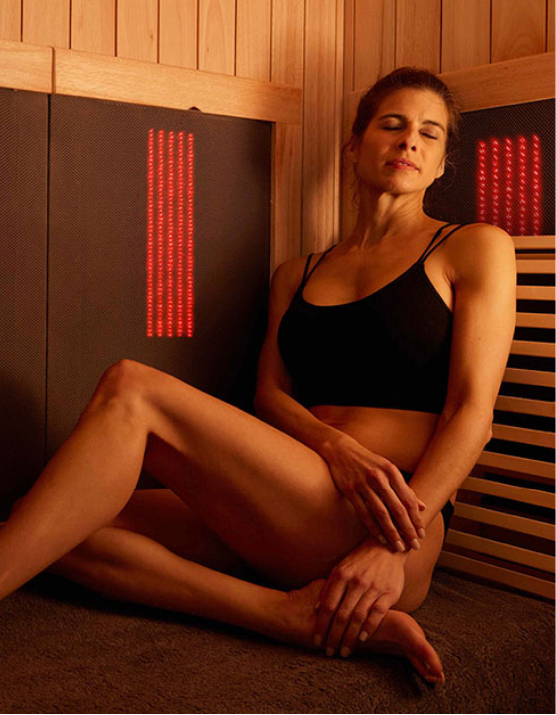
Infrared Sauna
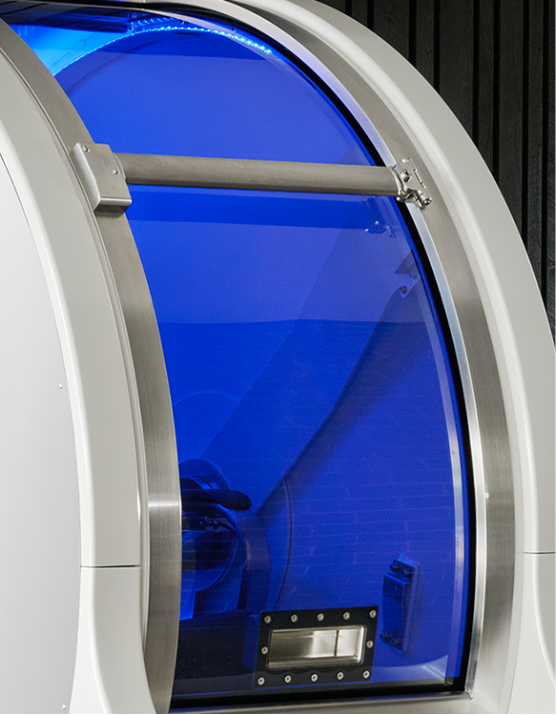
Infrared sauna delivers complementary thermal wavelengths that increase circulation and enhance lymphatic clearance — optimising the tissue environment for red light’s cellular repair effects.
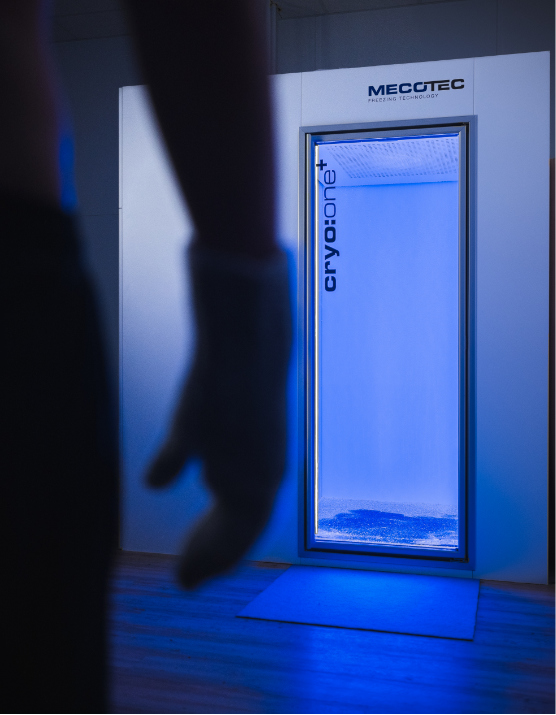
Cryotherapy
The definitive contrast protocol. Infrared sauna followed by cryotherapy creates the most powerful vascular cycling stimulus available — deep vasodilation followed by extreme vasoconstriction. Used by elite performance centres worldwide for recovery and resilience building.
Our Patients’ Red Light Therapy Experience

“The difference in my skin after twelve sessions was measurable — not just how it looked, but how it felt. Firmer, smoother, genuinely healthier. My aesthetician commented that my collagen density had visibly improved. This is the one treatment I will never stop.”
Our Patients’ Red Light Therapy Experience
“I started red light therapy for chronic knee pain. Within four sessions, the inflammation I had been managing for two years had noticeably reduced. I am running again — something I had genuinely given up on.”
Our Patients’ Red Light Therapy Experience
“As someone who trains six days a week, recovery is everything. Red light therapy reduced my DOMS significantly and I am handling higher training loads with less accumulated fatigue. It has become non-negotiable in my programme.”
Common Questions
Everything You Need to Know About Red Light Therapy
Answers to the questions most commonly asked before a first red light therapy session at Aspire Clinic.
-
Is red light therapy safe?
Red light therapy has an excellent safety profile supported by over three decades of clinical use and thousands of published studies. It is non-invasive, painless, and produces no UV radiation. Contraindications are limited — primarily photosensitising medications and active retinoid use on treatment areas. All Aspire sessions are supervised and protocols are individually calibrated.
-
How many sessions will I need?
This depends on your objective. For skin rejuvenation, a course of 10–20 sessions (2–3 per week) typically produces measurable improvement. For pain management, 6–12 sessions with ongoing maintenance as needed. For athletic recovery, sessions are scheduled around training cycles. For general cellular optimisation, 2–3 sessions per week sustained over 4–8 weeks is a common starting protocol.
-
What does a session feel like?
The experience is comfortable and relaxing. You may feel gentle warmth on the skin but no heat, burning, or pain. Protective eyewear is worn throughout. Most patients read, rest, or listen to audio during the 15–30 minute treatment. There is no downtime — you return to normal activities immediately.
-
Is this the same as a tanning bed?
No — red light therapy and tanning beds are fundamentally different. Tanning beds emit ultraviolet (UV) radiation, which damages DNA and accelerates skin ageing. Red light therapy operates in the 630–850nm wavelength range — entirely outside the UV spectrum. It contains no UV component and does not tan, burn, or damage skin. The mechanisms are opposite: UV degrades collagen; red light stimulates collagen production.
-
Can I combine red light therapy with other treatments?
Yes — and this is one of red light therapy’s strengths. It enhances outcomes when combined with HBOT (compounding mitochondrial benefits), infrared sauna (complementary thermal and photonic wavelengths), and IV vitamin drips (substrate availability for cellular repair). It is also used as a post-procedure adjunct to micro-needling, chemical peels, and aesthetic treatments at Aspire.
-
How does medical-grade differ from home devices?
Medical-grade devices deliver significantly higher irradiance (power density) at precise, verified wavelengths with uniform beam profiles. Consumer devices typically operate at a fraction of the therapeutic dose and lack the power to penetrate tissue to the depths required for mitochondrial activation. The difference is comparable to a clinical laser versus a consumer pointer — the principle is similar but the therapeutic impact is not.
Front of the card.
Lorem ipsum dolor sit amet, consectetur adipiscing elit. Mauris eu imperdiet leo. Etiam posuere feugiat dui in mattis. Nam sodales ac ante at rutrum. Nulla hendrerit varius lectus. Morbi auctor elit nunc, at ultrices massa placerat et. Maecenas finibus aliquam dolor, in fermentum lorem tempor nec. Nullam eu nibh ut mi gravida egestas. Duis ullamcorper justo sit amet lacus convallis pellentesque.
Front of the card.
Lorem ipsum dolor sit amet, consectetur adipiscing elit. Mauris eu imperdiet leo. Etiam posuere feugiat dui in mattis. Nam sodales ac ante at rutrum. Nulla hendrerit varius lectus. Morbi auctor elit nunc, at ultrices massa placerat et. Maecenas finibus aliquam dolor, in fermentum lorem tempor nec. Nullam eu nibh ut mi gravida egestas. Duis ullamcorper justo sit amet lacus convallis pellentesque.
Front of the card.
Lorem ipsum dolor sit amet, consectetur adipiscing elit. Mauris eu imperdiet leo. Etiam posuere feugiat dui in mattis. Nam sodales ac ante at rutrum. Nulla hendrerit varius lectus. Morbi auctor elit nunc, at ultrices massa placerat et. Maecenas finibus aliquam dolor, in fermentum lorem tempor nec. Nullam eu nibh ut mi gravida egestas. Duis ullamcorper justo sit amet lacus convallis pellentesque.
Your Path to Cellular Renewal Starts Here.
Book a consultation at Aspire Clinic, 29–35 Mortimer Street, Fitzrovia W1. Discover whether red light therapy is right for your health objectives.