Children’s Dentistry
Gentle Dental Care for Children,
From the Very First Tooth
Positive, unhurried appointments for infants, children, and teenagers
About the Service
Starting Well Makes All the Difference
A child’s relationship with dentistry is shaped early, and shaped decisively. A first appointment that is calm, unhurried, and positive can define how a child relates to dental care for the rest of their life. A difficult or frightening experience — however brief — can create anxieties that persist well into adulthood. The approach we take with children is not incidental to our broader care; it is the foundation of it.
At Aspire, children’s dental appointments are designed from the ground up to be different. Our clinicians have experience in working with young patients at every stage — from the arrival of the first milk tooth to the management of teenage orthodontic needs. Appointments are unhurried. Explanations are clear and age-appropriate. Encouragement is consistent. Children are introduced to the dental environment gently, with trust established before anything clinical begins.
The clinical focus is, above all, preventive. Most dental problems in children are entirely avoidable with the right professional guidance and home habits. We work with parents as equal partners in this — providing the practical, evidence-based guidance that makes the time between appointments as valuable as the appointments themselves.
"A child who leaves their dental appointment smiling has learned something that will stay with them for life. "
Is This Right for Your Child?
Every Stage of Your Child’s Dental Journey
Infants and toddlers from the first tooth The British Society of Paediatric Dentistry recommends a first dental visit when the first milk tooth appears, or by age one — whichever comes first
Pre-school children Early check-ups establish positive associations, allow dietary guidance, and detect developmental concerns before they become problems
School-age children Regular appointments, fluoride varnish, and fissure sealants protect against the decay most prevalent in this age group
Children with dental anxiety Our gentle, patient-led approach is specifically suited to children who have had difficult previous dental experiences or who are nervous by temperament
Teenagers Adolescent care includes monitoring of wisdom tooth development, supporting orthodontic treatment, and addressing lifestyle factors such as sports drinks and whitening products
Children requiring fillings or restorations Where decay has occurred, we restore conservatively and with the child’s comfort and confidence at the centre of every decision
Children needing orthodontic screening Early assessment of bite development and tooth alignment can prevent more complex problems later; we identify concerns and refer or treat as appropriate
Children with additional needs or medical complexity Where extra support is required, we adapt our approach and environment accordingly, and liaise with other healthcare professionals as needed
We welcome children from their very first tooth and continue care through adolescence — working toward an adult who approaches their own dental health with ease and confidence.
What to Expect
Your Child’s Appointment
Phase 1
Before Your Appointment
Talk to your child about what to expect in age-appropriate terms: that we will count their teeth, look at how they are growing, and clean them gently. Avoid words that carry negative associations and instead frame the visit as a normal, positive part of looking after themselves. If you have any concerns about your child’s dental development — spacing, bite, habits such as thumb-sucking — note these beforehand so we can address them at the appointment.

Phase 2
On the Day
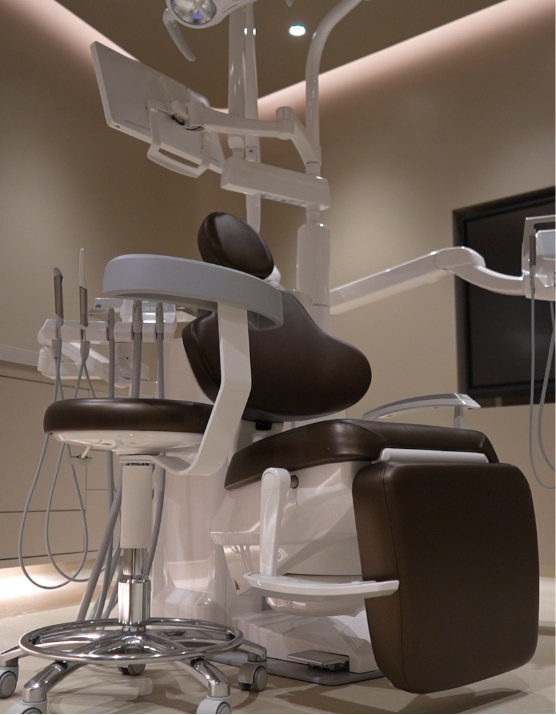
We take time to introduce children to the clinical environment before anything begins — exploring the chair, the light, each instrument — with clear, friendly explanation at every step. Nothing proceeds without permission and understanding. Appointments are never rushed. We celebrate what went well at every visit, regardless of how it measured against a clinical ideal. A child who has been heard and respected leaves wanting to come back.
Phase 3
After Your Appointment
We provide clear, practical home care guidance at each visit — tailored to your child’s age, brushing ability, and dietary habits. We explain what we found, what it means, and what to watch for between now and the next appointment. Where follow-up or onward referral is needed, this is arranged before you leave. Our team is available to answer any concerns that arise between appointments.

Step by Step
Children’s Dental Journey
The First Visit
For very young children, the first appointment is about one thing: meeting the team and discovering that the dental practice is a calm, friendly, interesting place to be. A gentle count of the teeth is the only clinical step. No treatment is performed unless there is an urgent need. The emotional tone set at this first visit shapes every appointment that follows.
Regular Check-Ups — Every Six Months
From around age two to three, six-monthly check-ups assess the development and health of the teeth and bite. We look for early signs of decay, monitor the eruption pattern of permanent teeth, assess bite development, and discuss dietary habits with parents. X-rays are taken only when there is a specific clinical justification — never as a matter of routine.
Preventive Treatments
Fluoride varnish is applied every six months from the point of tooth eruption, strengthening enamel and significantly reducing decay risk. Fissure sealants are applied to the permanent back teeth once they erupt — typically around age six to seven — protecting the deep grooves where bacteria accumulate and decay begins. Both treatments are quick, painless, and among the most effective preventive interventions available for children.
Restorative Care
Where decay is found, we restore conservatively — removing only what is necessary, using modern composite materials that require minimal healthy tooth structure to be sacrificed. Local anaesthesia is applied topically before any injection, and we use a calm, step-by-step approach that keeps children informed and in control. We do not proceed faster than the child is comfortable with.
Orthodontic Screening and Forward Planning
From around age seven, we monitor bite development and the eruption pattern of permanent teeth as part of routine check-ups. Where concerns are identified — crowding, misalignment, habits affecting bite development — we discuss the options with parents well in advance: whether early interceptive treatment is appropriate, or whether monitoring and referral to our orthodontic team at the right developmental moment is the better course.
Comfort & Amenities
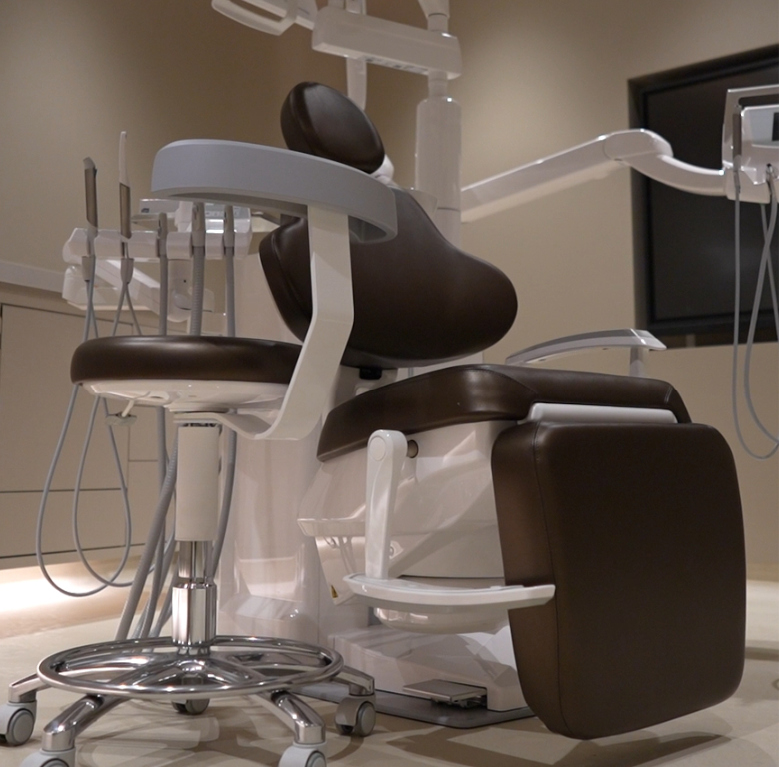
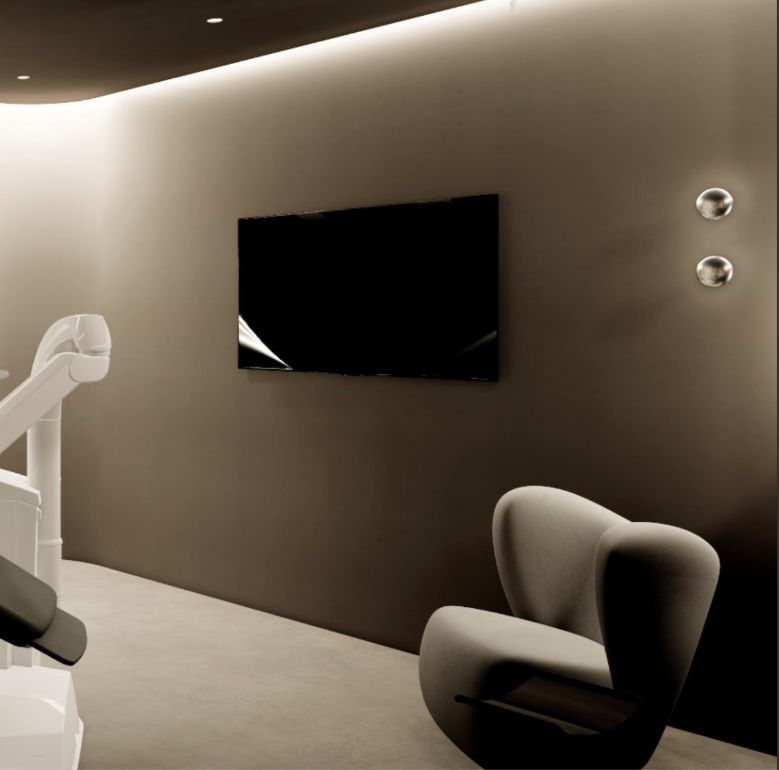
- Child-friendly treatment rooms
- Unhurried appointments with age-appropriate explanations throughout
- Fluoride varnish and fissure sealants available at every appropriate visit
- Direct liaison with our orthodontic team for screening referrals
From Our Patients’ Families
What Parents Tell Us
My daughter had been frightened of the dentist since a difficult experience at age four. At Aspire, the clinician spent the entire first appointment simply talking to her and letting her explore — no treatment at all. She returned the following week asking when she could go again. I cannot overstate what a difference that approach made.
From Our Patients’ Families
What Parents Tell Us
My son has additional support needs that make unfamiliar routines and environments genuinely challenging. The team at Aspire adapted everything without us having to ask — slower pace, clear signalling before each step, environmental adjustments. It was the first dental appointment he left without distress. That means more than I can say.
From Our Patients’ Families
What Parents Tell Us
We brought both children to Aspire for the first time when they were each around one year old. Three years later, neither of them has any anxiety about going to the dentist — they consider it a completely ordinary part of their routine. That is entirely down to how consistently Aspire has handled every appointment from the very first.
Common Questions
Questions Parents Ask Us
-
When should my child first see a dentist?
The British Society of Paediatric Dentistry recommends that a child’s first dental appointment takes place when their first milk tooth appears, or by their first birthday — whichever comes sooner. This early visit is not primarily clinical: it is about meeting the team, establishing a positive association with the dental environment, and receiving dietary and brushing guidance. Starting early is the single most effective thing a parent can do to support their child’s long-term dental health.
-
My child is frightened of the dentist — can you still help?
Yes, and this is one of the most common situations we see. Our approach with anxious children is built around patience, consistent explanation, and allowing the child to guide the pace. We never proceed faster than a child is comfortable with. Where a child is not ready for clinical treatment at a first visit, we count that appointment as a success regardless. Many of our most anxious young patients become our most enthusiastic ones over time.
-
What dental treatments do children typically need?
Preventive care forms the core of children’s dentistry: six-monthly check-ups, fluoride varnish applied at each visit, and fissure sealants on the permanent back teeth once they erupt. Where decay is found, conservative composite fillings restore the tooth with minimal removal of healthy structure. As children grow, orthodontic screening becomes part of routine check-ups. The emphasis throughout is prevention — most dental problems in childhood are avoidable with consistent care.
-
How often should children attend dental appointments?
Every six months is appropriate for most children. Some children at higher risk of decay — due to dietary habits, certain medications, or developmental factors — may benefit from more frequent visits. We will recommend the right interval for your child at each appointment and adjust it as their circumstances change. Consistent attendance matters more than the precise frequency.
-
Are dental X-rays safe for children?
Yes. Modern dental X-ray equipment delivers very low levels of radiation, and we use a lead apron as standard. We take X-rays only when there is a specific clinical reason — to assess the development of unerupted teeth, identify decay between teeth, or evaluate a particular concern. We do not take routine X-rays without clinical justification.
-
What are fissure sealants and does my child need them?
Fissure sealants are thin protective coatings applied to the biting surfaces of the back teeth, where natural grooves (fissures) create hiding places for the bacteria that cause decay. They are applied once the permanent first molars erupt, typically around age six to seven. The procedure is quick and completely painless. Evidence consistently shows that sealants significantly reduce cavity risk in the teeth most vulnerable to decay during childhood and adolescence.
-
When should we start thinking about orthodontic treatment?
We begin orthodontic screening as part of routine check-ups from around age seven, when the permanent tooth eruption pattern becomes assessable. Many orthodontic concerns are most effectively addressed within a specific developmental window — early assessment gives families the time to understand their options and plan treatment without being rushed by biological timing. We work closely with our orthodontic team and refer when appropriate.
-
How can I help my child develop good dental habits at home?
Brushing twice daily with an age-appropriate fluoride toothpaste — the last time being immediately before bed — is the most important habit. Children under seven should have their teeth brushed by a parent or supervised closely. Limiting sugary foods and drinks to mealtimes, rather than allowing grazing throughout the day, dramatically reduces decay risk. We provide written, age-specific home care guidance at every appointment and are happy to answer questions as your child grows.
Complete Your Care
Related Treatments
Orthodontics
As children grow, bite development and tooth alignment often become the priority. Our paediatric and orthodontic teams work together to assess readiness, discuss timing, and ensure any orthodontic journey begins at the right moment for each individual child.

Emergency Dentistry
Dental accidents during childhood — falls, collisions, sports injuries — are common. Our emergency dental team is available for same-day appointments and provides the same calm, expert care to young patients as to adults.

General Dentistry
As children approach adulthood, the transition to general dental care is a natural progression. Our adult team provides a familiar, considered environment for that step — ensuring continuity of care and records across the full Aspire patient journey.

Get in Touch
Start Their Dental Journey the Right Way
The earlier a child begins their relationship with dental care, the easier every subsequent appointment becomes — and the better placed they are to maintain that health for life. Book your child’s first appointment with Aspire. We will take it from there.