
Oral Surgery
Oral Surgery Delivered with Precision and Care
Expert surgical care for extractions, wisdom teeth, bone grafting, and jaw procedures
About the Service
When Surgical Skill Makes All the Difference
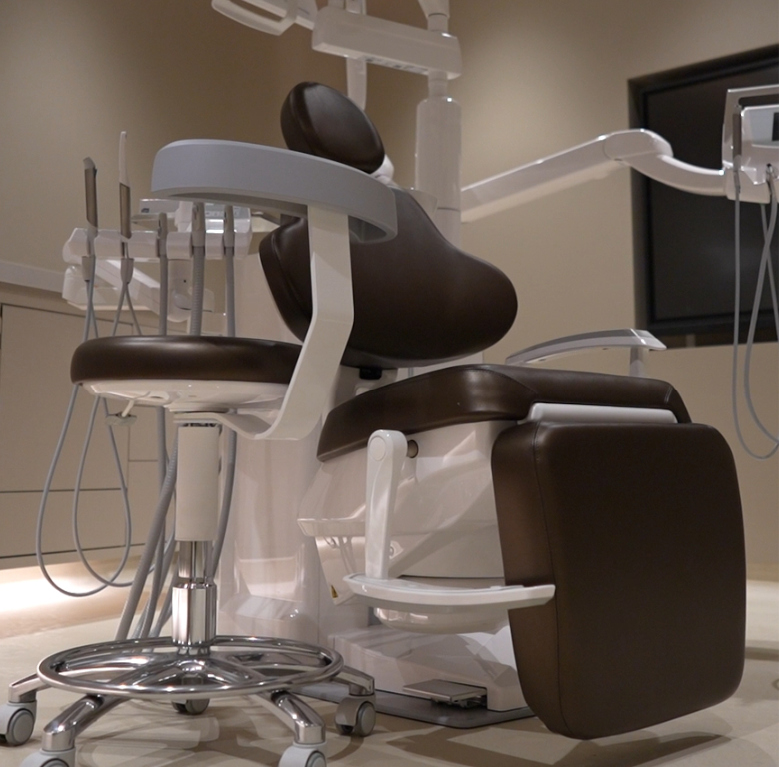
Oral surgery encompasses a broad range of procedures — from straightforward tooth extractions to the management of complex impactions, jaw pathology, and preparatory bone grafting ahead of implant placement. When surgical intervention is indicated, the skill of the clinician and the quality of the clinical environment are critical to both the outcome and the experience.
At Aspire, oral surgical procedures are performed by clinicians with advanced training in surgical technique and patient management. Our approach is grounded in minimising trauma: precise technique, appropriate sedation, and thorough post-operative support combine to make what many patients dread one of the most straightforward aspects of their dental care. Anxiety around surgery is taken seriously — we address it as a clinical matter, not an afterthought.
Where surgery is followed by a period of recovery, Aspire’s Wellness offering provides meaningful clinical support. Therapies including hyperbaric oxygen and IV vitamin infusions have been used to support tissue repair and reduce post-operative inflammation — a dimension of care that our integrated setting makes available and that few dental practices can offer.
"When surgical skill is matched by genuine care for your recovery, the procedure becomes something you no longer need to fear. "
Is This Right for You?
When Oral Surgery Is Indicated
Impacted wisdom teeth Teeth that have failed to fully erupt and are causing pain, infection, crowding, or pressure on adjacent teeth
Teeth requiring surgical extraction Where roots are curved, fractured, or positioned such that a conventional extraction is not clinically feasible
Dental abscess with structural compromise Infections where the tooth cannot be preserved and surgical removal, with appropriate site preparation, is required
Retained roots or failed restorations Root fragments, fractured crowns, or hardware that requires surgical-level access for safe removal
Bone grafting ahead of implant placement Rebuilding lost bone volume to provide the stable, adequate foundation that successful implant integration requires
Cyst or soft tissue removal Benign lesions, odontogenic cysts, or soft tissue irregularities requiring surgical excision or biopsy
Jaw surgery (orthognathic) Corrective procedures for jaw misalignment affecting bite function, breathing, or facial balance
Referral from your dentist or specialist Complex cases forwarded from general dental practice, orthodontics, or other clinical specialisms for surgical management
If you have been advised that surgery is necessary, or if you would like a specialist opinion on a complex dental situation, we welcome both referrals and self-referrals. A consultation does not commit you to a course of treatment.
What to Expect
Your Surgical Appointment
Phase 1
Before Your Appointment
Your surgical consultation establishes the diagnosis, reviews your full medical history, and confirms your fitness for the planned procedure. Anaesthesia and sedation options are discussed in detail — there is no obligation to proceed under a particular approach, and we will not move forward until you are comfortable with every aspect of the plan. Pre-operative instructions are provided in writing and confirmed at your consultation.

Phase 2
On the Day
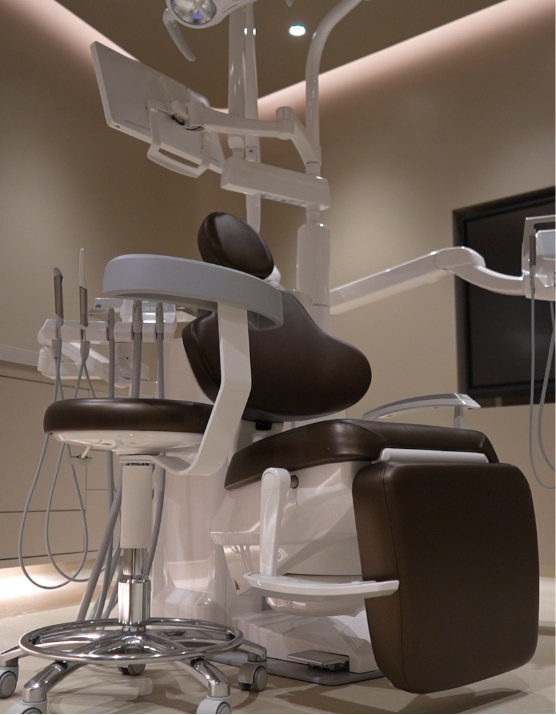
You arrive, are settled, and your chosen anaesthesia or sedation is administered at your own pace. The surgical procedure is performed by your clinician with precision and as little tissue disturbance as the technique allows. Our clinical team is experienced in managing both anatomy and anxiety. Depending on the complexity of the procedure, you may be discharged within one to two hours of arriving.
Phase 3
After Your Appointment
Post-operative care is thorough. Prescribed medication, written aftercare instructions, and emergency contact details are provided before you leave. A follow-up appointment is scheduled to review healing at seven to ten days. Where recovery support through our Wellness therapies is clinically appropriate, this is arranged and briefed before discharge — so your recovery plan is in place from the moment you leave.

Step by Step
Your Oral Surgery Journey
Consultation and Imaging
A detailed consultation reviews your clinical situation, relevant medical history, and all surgical options available. CBCT or panoramic X-ray imaging provides the three-dimensional anatomical understanding required for precise surgical planning. You leave this appointment with a written diagnosis, clear options, and no pressure to decide immediately.
Pre-Operative Planning
Anaesthesia preference — local, intravenous sedation, or general anaesthetic at a partner facility for the most complex cases — post-operative arrangements, and any required pre-operative medication are confirmed in advance. For patients with significant medical history, we coordinate with your GP or relevant specialist as appropriate.
The Procedure
Surgery is performed under the agreed anaesthesia by your oral surgeon. Technique is selected to minimise tissue trauma and preserve as much healthy structure as possible. Wisdom tooth removal approach varies by impaction depth and angulation; bone grafting material and volume are determined precisely during planning. Throughout, our clinical team manages both the surgical and the patient experience.
Immediate Post-Operative Care
You are monitored in our recovery area until fully alert and stable. Pain management is addressed before discharge — you will not leave without appropriate analgesic provision. All post-operative instructions are reviewed verbally and confirmed in writing. For IV sedation cases, a responsible adult must accompany you home and remain with you for the following twelve hours.
Recovery and Follow-Up
A follow-up appointment at seven to ten days reviews healing and removes any sutures. Where Wellness therapies such as hyperbaric oxygen or IV vitamin infusions are recommended to support tissue repair and reduce recovery time, these are arranged before you leave. Your surgeon remains contactable throughout the recovery period — we do not consider our responsibility discharged at the surgery door.
Comfort & Amenities
- Private surgical suites throughout
- IV and inhalation sedation available in-clinic
- General anaesthetic at partner facility for complex cases
- Wellness therapy recovery support available on-site
Patient Stories
Surgery That Changed How I Thought About Dental Care
I had been putting off having my wisdom teeth removed for two years because I was genuinely frightened. The Aspire team took my anxiety seriously from the first conversation. The procedure itself was painless and far quicker than I had imagined. My only regret is not having done it sooner.
Patient Stories
Surgery That Changed How I Thought About Dental Care
I was referred for a bone graft ahead of an implant. The surgeon was meticulous and clear about what to expect at every stage. The integration with the wellness side of the clinic — an IV vitamin infusion during my recovery — felt genuinely ahead of what I expected from a dental practice. The healing was faster than I had been led to anticipate.
Patient Stories
Surgery That Changed How I Thought About Dental Care
A complex surgical extraction that my previous dentist had declined to attempt. Aspire handled it without drama, and I was back at my desk the following morning. The calm of the environment and the quality of care made a genuinely difficult procedure feel entirely manageable.
Common Questions
Common Questions About Oral Surgery
-
When is oral surgery necessary?
Oral surgery is indicated when a dental problem cannot be resolved by non-surgical means. Common reasons include impacted wisdom teeth, teeth that cannot be extracted conventionally due to root anatomy or fracture, dental cysts, bone loss requiring grafting ahead of implant placement, and jaw misalignment requiring orthognathic correction. Your clinician will always discuss non-surgical alternatives where they exist before recommending a surgical approach.
-
Is oral surgery painful?
The procedure itself is not painful — effective local anaesthesia or sedation is administered throughout. Some discomfort in the days following surgery is normal and managed with prescribed or over-the-counter analgesics. The majority of patients find post-operative discomfort to be significantly less than they had anticipated. Our post-operative support is designed to minimise this further.
-
What sedation options are available?
Local anaesthesia is standard for most oral surgical procedures. Intravenous (IV) conscious sedation is available in-clinic for patients with significant anxiety or for more complex procedures — you remain conscious but deeply relaxed, with little or no memory of the procedure. For cases requiring general anaesthetic, we coordinate with a partner facility and manage the referral pathway on your behalf.
-
How long does recovery take?
Recovery time depends on the complexity of the procedure. Simple surgical extractions typically allow a return to normal activity within twenty-four to forty-eight hours. Wisdom tooth removal — particularly of deeply impacted teeth — may involve three to five days of meaningful recovery. Bone grafting timelines vary by site and volume. Your surgeon will provide a realistic, procedure-specific expectation at your consultation.
-
Do all wisdom teeth need to be removed?
No. Wisdom teeth that have fully erupted, sit in functional alignment, can be cleaned effectively, and are not placing adjacent teeth at risk may be safely monitored without intervention. Removal is recommended when they are impacted, partially erupted, recurrently infected, contributing to crowding, or are at risk of damaging the neighbouring tooth. Your clinician will assess each tooth individually.
-
What is bone grafting and when is it needed?
Bone grafting rebuilds areas of jawbone that have been lost as a result of tooth extraction, gum disease, or trauma — most commonly to create the stable foundation that dental implants require. Graft material (which may be synthetic, from a donor source, or from another site in the mouth) is placed and allowed to integrate over several months before implant placement proceeds. It is a well-established procedure with a high long-term success rate.
-
Can I drive after oral surgery?
If local anaesthesia alone has been used, you may drive once you feel fully alert and comfortable. If intravenous sedation has been administered, you must not drive for twenty-four hours following the procedure and must be accompanied home by a responsible adult who can remain with you. We confirm these requirements in writing at the pre-operative stage.
-
How do Wellness therapies support recovery?
Therapies such as hyperbaric oxygen therapy and IV vitamin infusions have been associated with accelerated tissue healing and reduced post-operative inflammation. Hyperbaric oxygen increases the oxygen concentration available to healing tissues; IV vitamin infusions can support the immune response and tissue repair at a cellular level. Where clinically appropriate, our team will discuss and schedule these therapies as part of your post-operative plan — available within the same building.
Complete Your Care
Related Treatments
Dental Implants
Oral surgery and implant placement are closely connected. Bone grafting, socket preservation, and surgical extraction often form part of the implant pathway. Our surgical and implant teams work in close collaboration to plan and deliver care as a single, coordinated journey.

Gum Clinic
Advanced periodontal disease occasionally requires surgical intervention beyond standard scaling and root planing. Our oral surgery and periodontal teams coordinate on complex cases to deliver a seamless, clinically coherent course of treatment.

Orthodontics
Wisdom tooth extraction is frequently recommended before or during orthodontic treatment to protect alignment and treatment outcomes. Our oral surgery and orthodontic clinicians coordinate to ensure surgical and orthodontic timelines work in tandem.

Get in Touch
Expert Surgical Care Begins with a Conversation
A surgical consultation at Aspire is not a commitment to treatment — it is a conversation with a specialist clinician who will give you an honest, informed assessment of your situation and the options available. We welcome referrals and self-referrals in equal measure.